Registration is Open!
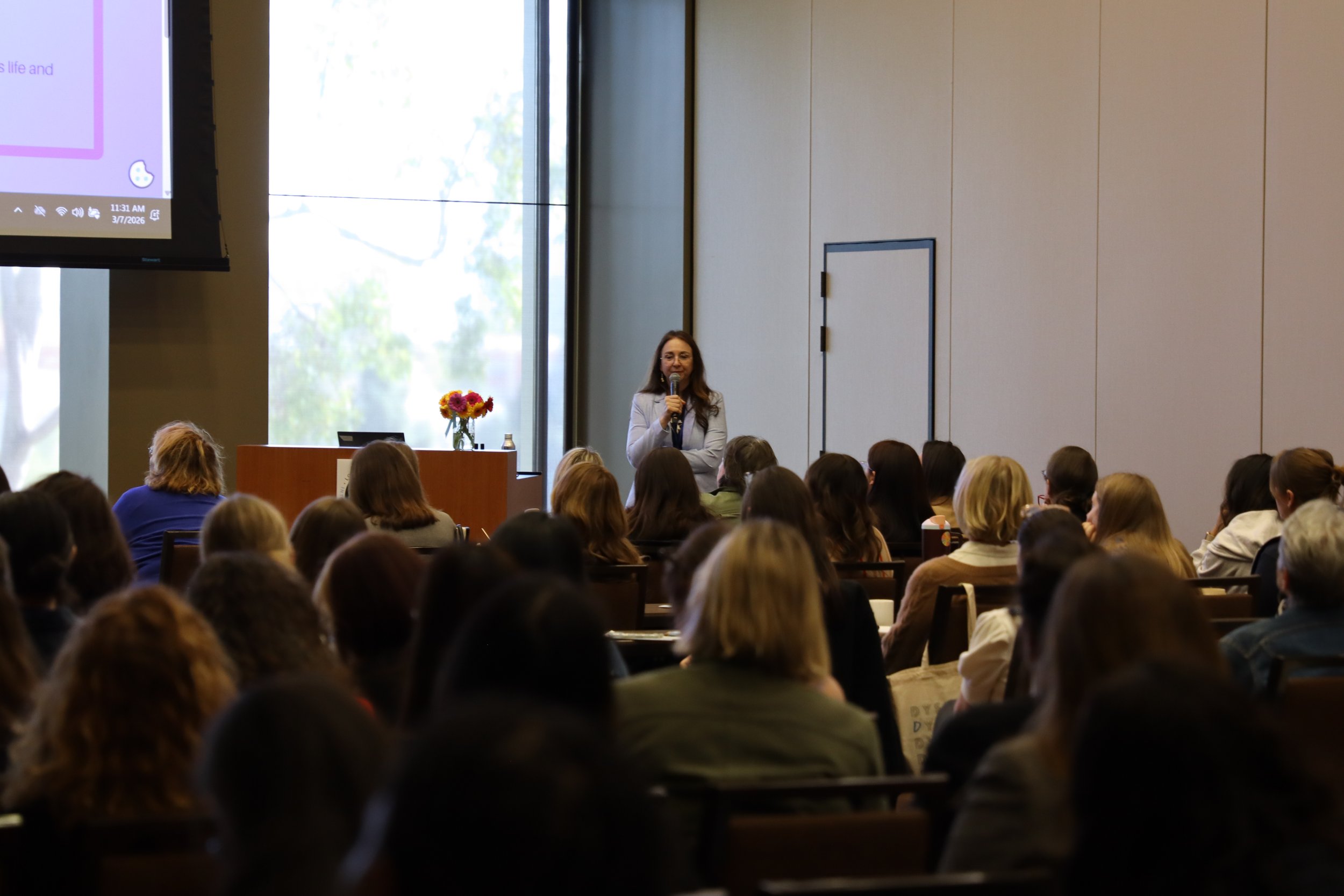
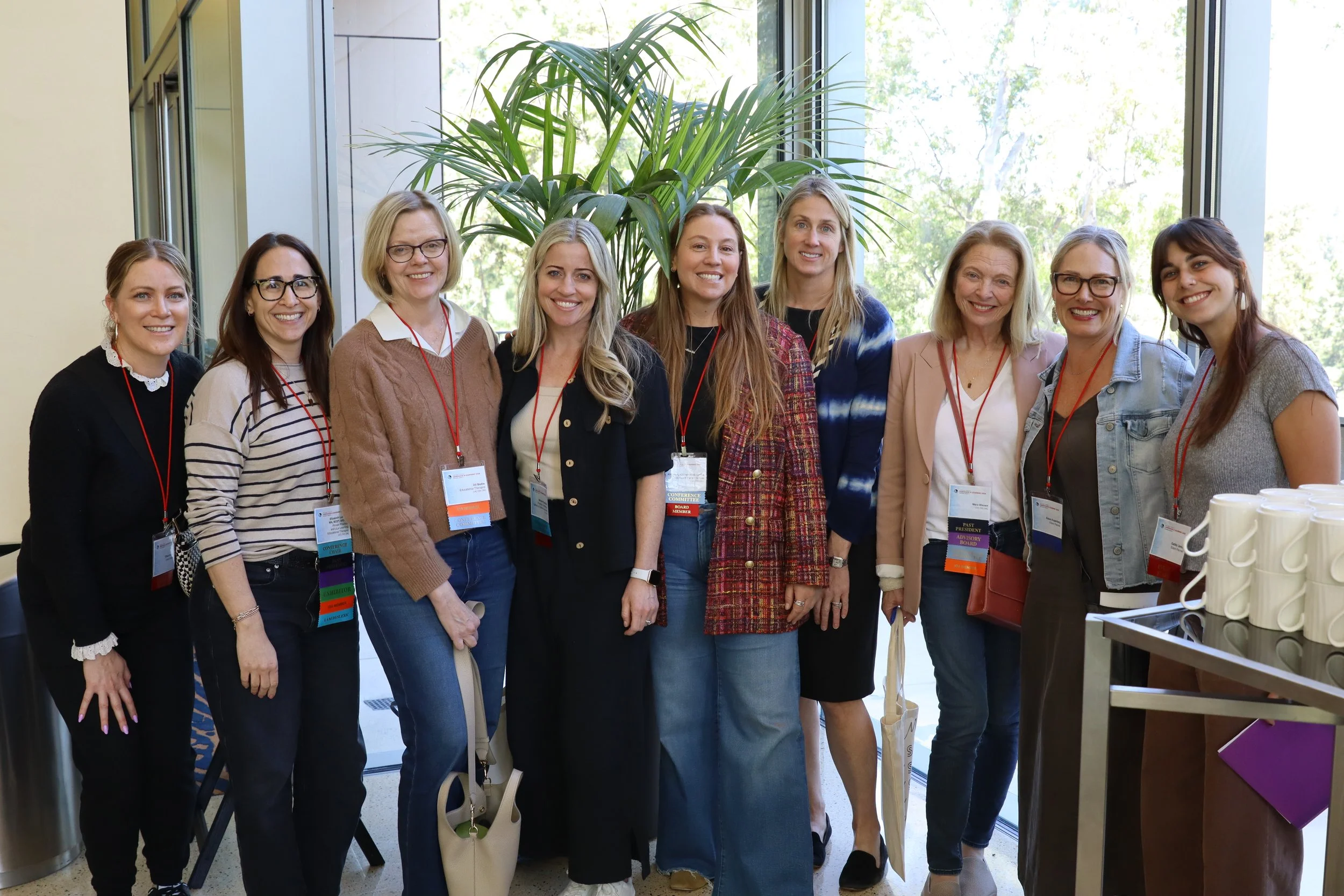
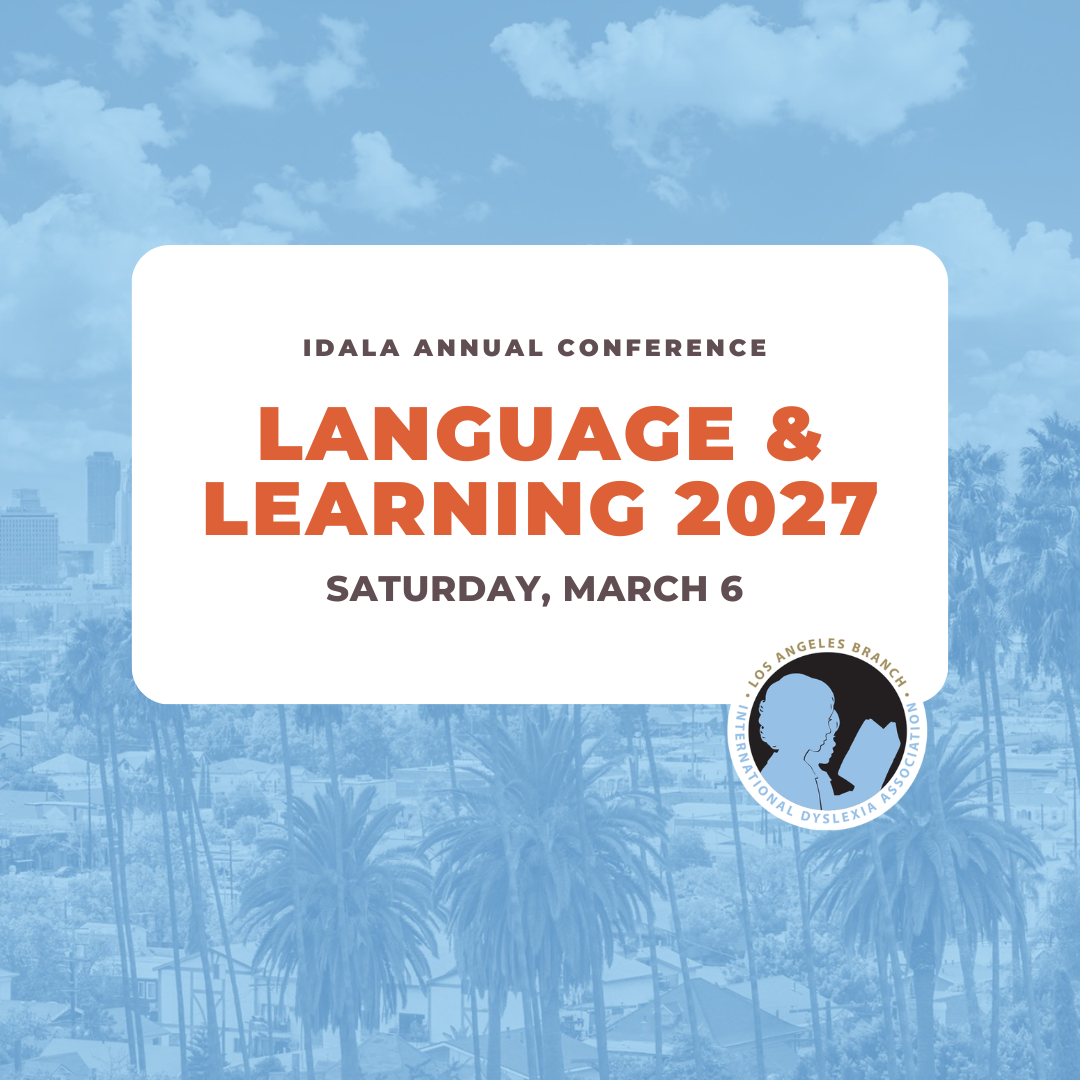
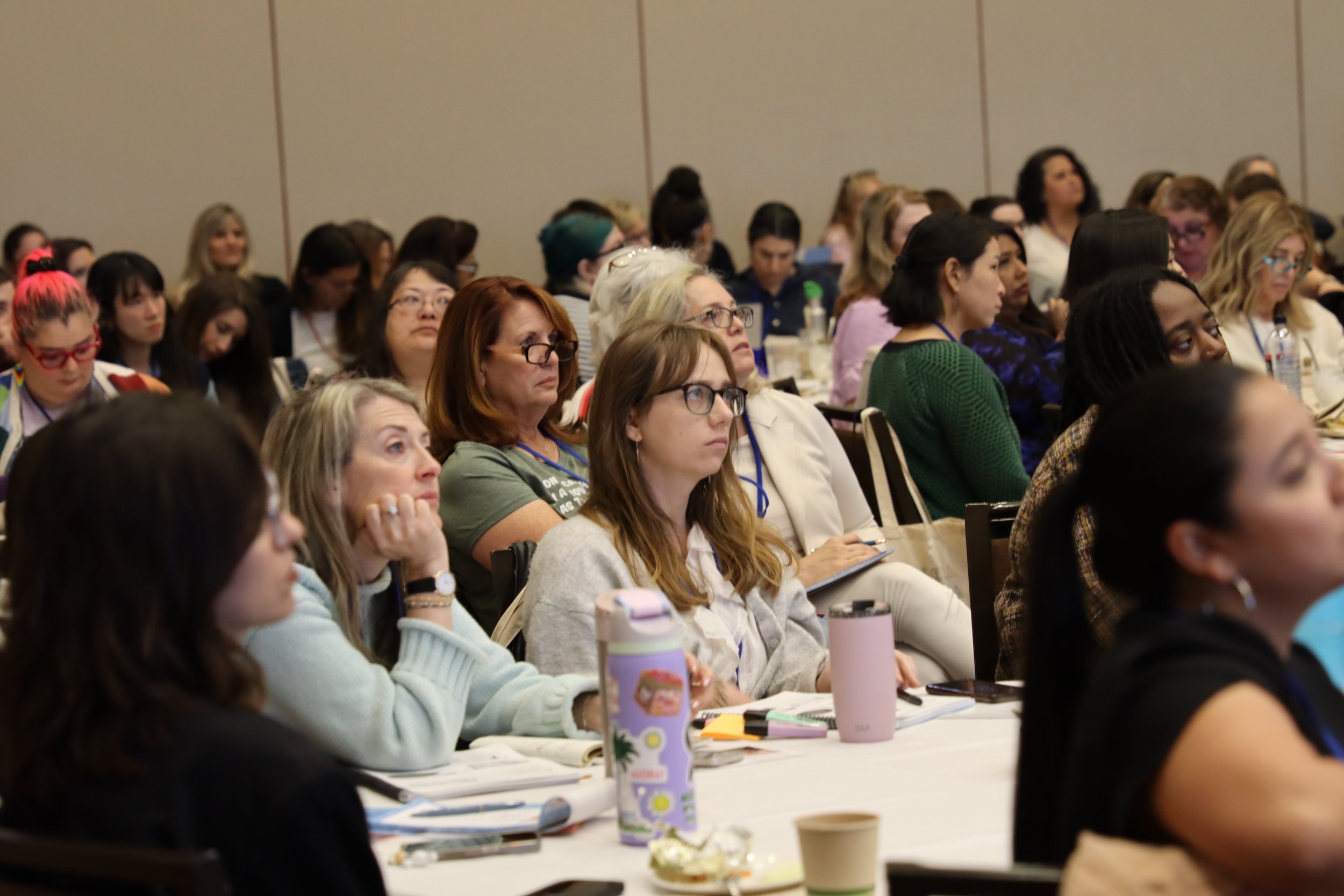
Join us for IDALA’S Annual Conference on Saturday, March 7 at UCLA.
This event brings together researchers, educators, clinicians, and advocates working in the fields of dyslexia and other language-based learning challenges to exchange knowledge, share best practices, and explore the latest advancements in the field.
Discounts for Earlybirds, IDA Members, Students, and Groups!
Lock in EARLYBIRD Pricing
Register by February 15 to receive discounted ticket pricing.
Save with IDA Member Rates
IDA members receive special pricing. Not a member yet? Join IDA to unlock member discounts, and enter your member number during registration.
Student Pricing Available
Discounted student tickets are available. A valid student ID is required at check-in.
Group Discounts
Groups of 5 or more receive 10% off. Contact our event organizer before registering to receive your group discount.
Contact:
alisonkuperberg@dyslexiala.org
917-312-8734
Purchase Orders Welcome
Submit your purchase order by February 15 to qualify for EARLYBIRD pricing.
Questions? We’re Here to Help
Not sure which ticket is right for you, or need help with registration, discounts, or purchase orders?
ASHA CEUs
ASHA CEUs are available as an optional add-on. Review CEU details here, then select the ASHA CEU option during registration.
Booklet Presale
Add on a spiral-bound conference booklet featuring all speakers’ presentation slides and supplemental materials. Pre-purchase during registration for $20. A limited number will be available on-site for $30, while supplies last. A free digital version will be available for all participants on the day of the conference.
KEYNOTE PRESENTATION
Tiffany P. Hogan, PhD, CCC-SLP
Language Comprehension: The (Often) Missing Key to Improving Reading Outcomes
-
Tiffany P. Hogan, PhD, CCC-SLP is a Professor in the Department of Communication Sciences and Disorders at MGH Institute of Health Professions and a Research Associate at Harvard Medical School. Dr. Hogan studies the genetic, neurologic, and behavioral links between oral and written language, with a focus on improving assessment and intervention in schools for neurodiverse children with Developmental Language Disorder and Dyslexia.
Her advocacy for children with language, speech, and literacy differences has led her to co-found a DLD informational website: dldandme.org, host a podcast seehearspeakpodcast.com, advise on readinguniverse.org, organize an annual conference on implementation science, and contribute information for articles in numerous news outlets including the New York Times, the Boston Globe, and EdWeek.
Dr. Hogan is passionate about ensuring children receive evidence-based assessment and instruction, creating environments in which neurodiversity is cherished, and listening to and learning from those who work with children in schools and clinics.
-
This presentation reviews the language foundations of reading comprehension through a developmental lens. It explores key subgroups of struggling readers—including dyslexia and developmental language disorder—with an emphasis on early identification and intervention, situated within current legislation and advocacy efforts. Participants will leave with fresh insights into evidence-based practice and practical strategies for improving childhood reading outcomes.
BREAKOUT SESSIONS
-
Tiffany P. Hogan, PhD, CCC-SLP
This presentation examines developmental language disorder with a focus on its impact on educational outcomes. Practical, evidence-based implementation resources will be shared within the framework of multi-tiered systems of support. Participants will leave with new insights into strategies for improving childhood language and reading outcomes.
Tiffany P. Hogan, PhD, CCC-SLP is a Professor at MGH Institute of Health Professions in Boston and Research Associate at Harvard Medical School. Dr. Hogan studies language and reading assessment and intervention in schools, especially for neurodiverse children with Developmental Language Disorder, Dyslexia, and/or Speech Sound Disorders. Her advocacy for children with language, speech, and literacy differences has led her to co-found a DLD informational website (dldandme.org), and host a podcast, SeeHearSpeak Podcast.
-
Lindsay Young, Ed.D. and Dr. Sue Sears
This session provides an overview of effective reading instruction and intervention for adolescents. The implications of adolescent reading difficulties, including social emotional impacts, academic expectations and achievement at the secondary level, and employment outcomes will be examined. Elements of a multicomponent approach to instruction, with a focus on word and sentence level skills, will be discussed. Finally, specific instructional practices designed for older striving readers will be presented.
Lindsay Young, Ed.D., is a national presenter, the author of several teacher activity books, and co-author of the WordBuilder Intervention application. Lindsay works for a large urban school district where she implements reading interventions and plans and facilitates district-wide literacy professional development. As a classroom teacher, Young earned National Board Certification, was featured on The Teaching Channel, and was named an Educator of the year by the California League of High Schools. She received her doctorate from University of Florida in Special Education with a specialization in dyslexia and is an adjunct faculty member at CSU Northridge.
Dr. Sue Sears is the Co-Faculty Director of the UC/CSU Collaborative for Neuroscience, Diversity and Learning and Professor Emerita, Department of Special Education, California State University, Northridge. Dr. Sears is the recipient of numerous personnel preparation grants and was most recently Co-Director of a federally-funded adolescent literacy model/demonstration project. At CSUN, Dr. Sears was Director of the Teaching, Learning, & Counseling Consortium, a multidisciplinary clinic that provides low-cost counseling, literacy tutoring, and resources to families and schools in the local community.
Participants are encouraged to bring a computer or iPad in order to access WordBuilder Intervention during the session.
-
Adrianne Meldrum, M.Ed.
Cracking the Code on Math Struggles reveals why so many students—especially those with dyslexia, dyscalculia, ADHD, or autism—hit a wall in math and what to do about it. Drawing on evidence-based practices and the Science of Learning, this session explores how memory, language, and cognitive processing impact math success. You’ll discover how systematic, explicit instruction using the CRA (Concrete–Representational–Abstract) approach helps students truly understand math instead of memorizing steps. Participants will leave with research-informed strategies and practical tools they can implement immediately to transform frustration into confidence and clarity in the math classroom.
Adrianne Meldrum, M.Ed. is the founder and owner of Made for Math (MFM), an all-online math center focused on serving students with dyslexia, dyscalculia, and math learning disabilities. She is a certified Multisensory Math Instructor through Marilyn Zecher. She has a Master’s Degree from Bridges Graduate School of Cognitive Diversity. Adrianne is married with three boys and lives in Queen Creek, AZ where she enjoys soaking up gorgeous sunsets!
-
Keryn M. Kwedor, M.S.Ed.
Though "write" may be a small, seemingly innocuous word, it presents one of the most daunting tasks for students with learning disabilities, such as dyslexia. There are many hidden demands that make writing challenging, including comprehension of the task and topic, the ability to organize ideas in logical order, and knowledge of grammar conventions. Helping all students feel equally successful in sharing their ideas requires scaffolding, consistency, and adherence to a clear process. The key to writing instruction is introducing new skills at an appropriate pace and constantly reviewing them as students move on to more complex tasks. This session will highlight a clear hierarchy for teaching writing skills, as well as a process that can be applied to a variety of writing assignments.
Keryn M. Kwedor, M.S.Ed. has taught at Landmark High School in the language arts and literature departments since 2003. As Landmark Outreach associate director, she manages content development and production, and she assists in overseeing all aspects of the program. For Outreach, Keryn has been a school consultant, produced materials for the DESE, and organized the Professional Development Seminars for Cape Cod Educators, in addition to coordinating and teaching courses for the Summer Institute, Landmark Outreach Online, and the Landmark SNHU partnership. Keryn holds a bachelor’s degree in English from Colby College and a master’s degree in special education from Simmons University.
-
Laura Rhinehart, PhD and Julie Rinker, M.Ed., WCT, CALT
This interactive workshop is designed for educators seeking practical and evidence-based tools to support students with dyslexia and co-occurring ADHD in reading instruction. Participants will learn how the characteristics of dyslexia and ADHD uniquely impact reading development. Together, we will examine effective intervention strategies to add to structured literacy interventions to meet the needs of students who struggle with both reading and focus. Attendees have an opportunity to practice these strategies, so they will leave with actionable approaches to enhance engagement, promote progress, and build confidence in young students with co-occurring dyslexia and ADHD.
Laura Rhinehart is an Assistant Researcher in the Department of Education at the University of California, Los Angeles (UCLA). She earned her Ph.D. in Special Education from UCLA and California State University, Los Angeles. Dr. Rhinehart’s research on reading, learning disabilities, ADHD, and dyslexia has been published in peer-reviewed academic journals. In 2024, she received the Early Career Publication Award from the Council for Exceptional Children’s Division for Research for her article, “Children Who Receive Special Education Services for ADHD”, published in the Journal of Emotional and Behavioral Disorders. Her current research focuses on dyslexia, assessment/screening, and children’s executive functioning skills. She is also interested in developing and testing interventions for students with ADHD and/or dyslexia.
Julie Rinker is a doctoral student in Special Education in the Cal State LA/ UCLA Joint Doctoral Program. Her research interests include literacy and dyslexia interventions for secondary and post-secondary students, human rights curriculum, and mentoring teachers as they become increasingly specialized as literacy instructors.
-
Bianca Dino, M.A.T.
In every classroom, there are students whose brilliance is overshadowed by the challenges of dyslexia. This session invites educators to step into their world, experiencing the emotional, academic, and social hurdles these students face, and to discover how small shifts can spark profound change. Through interactive exploration and research-based strategies, you’ll learn how to use relationship-building, personalized instruction, and innovative technology to remove barriers and elevate learning. Together, we’ll reimagine classrooms as inclusive spaces where every learner feels seen, supported, and capable of success. Walk away equipped with practical tools and renewed purpose to empower students with dyslexia and to help them realize their full potential.
Bianca Dino, M.A.T. brings a wealth of experience as a former classroom teacher, instructional coach, and educational consultant. She holds a master’s degree in Teaching and Curriculum Design from the University of Southern California and is a certified Dale Carnegie Coach and Trainer. As Manager of Professional Learning at Learning Ally, a 75-year-old nonprofit dedicated to supporting struggling readers, Bianca leads the design and implementation of results-driven professional learning solutions that elevate literacy instruction and drive transformative change in educator practice.
-
Nanci Shepardson, M.S.Ed., Ed.S., W.D.P., CPACC
Artificial Intelligence (AI) is an exciting new technology that has created quite the buzz across all industries. In education, the use of AI generates a lot of questions for teachers and students alike. For students with dyslexia, the implications of the use of AI are potentially very exciting. This session will provide an overview of what AI is, how it is used, what the preliminary research is saying about its effectiveness with students with reading disabilities. Finally, AI tools that support the learning process for students with dyslexia will be presented.
Nanci Shepardson is a Reading and Educational Specialist with an M.S.Ed. in Language and Literacy and an Ed.S. in Assistive Technology. She is a Certified Dyslexia Practitioner and holds a CPACC credential. She is a seasoned teacher and a credentialed K-12 Reading Specialist. She is a published author, an advocate for students with disabilities and their families, and is also a professional speaker on dyslexia, language-based disabilities, executive functioning, and assistive technology throughout the country.
Equity and access for all, especially regarding access to research-based reading instruction and assistive technology services, are at the forefront of her work.
-
Nancy Redding, M.Ed., ATF/OGA, C-SLDS/IDA
Students in upper elementary and beyond often struggle with reading, spelling, and understanding multisyllable words. Yet, most meaningful words in their readings contain two or more syllables and are built of morphemic units. The key to tackling longer words is knowing how to chunk them, using syllable and/or morpheme division. Syllables are helpful for ease in decoding, but division by morpheme adds meaning and leads to more efficient mapping. A knowledge of morphology, the basis for spelling in English, also leads to more accurate spelling. This workshop will look at the efficacy of combining these strategies and offer an abundance of ideas for teaching and practicing syllabication and morphological division with your students.
Nancy Redding, M.Ed., is an Accredited Training Fellow in Orton Gillingham Academy and certified as a Structured Literacy Dyslexia Specialist by IDA. Currently, she trains teachers and tutors for all levels of certification in the Academy. She has served as a learning specialist in elementary, high school, and Community College, utilizing the OG approach in these settings and in private practice for over 40 years. Nancy is the co-author with Marcia Henry, Ph.D. of Patterns for Success In Reading and Spelling, a literacy program using Orton-Gillingham based lessons. She currently serves on the Board of Directors for Orton Gillingham Academy. Nancy is past president of the Northern CA branch of International Dyslexia Association, and continues to be active in IDA locally and nationally.
-
IDALA Board Members
During this workshop, facilitators will challenge you with a series of tasks that take you inside the dyslexic mind. By engaging in this simulation, you will gain a deeper understanding of how people with learning differences (LD) think and learn differently and what sorts of struggles they may encounter in everyday environments that favor neurotypical learners. This immersive workshop—designed by the International Dyslexia Association, Northern California Branch— shines a light on the urgency of meeting the distinct needs of LD learners.
Apply for a scholarship!
Scholarships are available for teachers, school administrators, and IDA Members to attend Language and Learning 2026. Applications are due January 30, 2026 and award notifications take place on a rolling basis.
Full scholarships are available for teachers and school administrators who serve students in our geographic service area. Scholarships are available to IDA members at a reduced rate of $90.
2026 Gold Sponsors
2026 Silver Sponsor
2026 Exhibitors
Interested in becoming a sponsor or exhibitor?
Want to share your services, products, and/or expertise with over 250 participants, including educators, administrators, specialists, and parents?
Past Conference
Keynote Presentations
2025
Modern Realities: Dyslexia's Impact on Learning and Emotional Well-Being
Tim Odegard, Ph.D. Professor of Psychology and the Katherine Davis Murfree Chair of Excellence in Dyslexic Studies at Middle Tennessee State University
2024
2024 Updates in Neuroscience Research and Evidence Based Practice
Dr. Martha Burns, Director of Neuroscience Education at Carnegie Learning Corporation and Adjunct Associate Professor at Northwestern University
2023
The Language Literacy Network: A New Twist on the Reading Rope to Advance Literacy Outcomes
Jan Wasowicz, PhD, CCC-SLP, BCS-CL author and software developer,
2022
How to Connect Reading Research and the Real World
Mark S. Seidenberg, PhD, Vilas Research Professor and Donald O. Hebb Professor in the department of psychology at the University of Wisconsin-Madison
Teaching Reading to Children that Speak Varieties of English
Dr. Julie Washington, PhD, Professor in the School of Education at the University of California, Irvine (UCI)
Boosting Reading Skills in Struggling Readers: Understanding Orthographic Mapping and the Role of Grapho-Phonemic Proficiency
David A. Kilpatrick, PhD, Professor of Psychology for the State University of New York College at Cortland
Childhood Stress and Anxiety
Katie Hurley, LCSW, parenting educator, public speaker, and author.
2020
The Science of Teaching Reading: Why, How, and What to Teach
Dr. Margie Gillis, Ed.D., CALT President, Literacy How, Inc.
2019
Setting the Stage for Accurate and Fluent Reading: Decoding Foundation Skills
Anita Archer, PhD, Educational Consultant, Author
2018
The Perfect Storm: Inattention, Dyslexia and Anxiety
Dr. Eric Tridas, MD, FAAP, Medical Director of the Tridas Center for Child Development, Tampa
2017
The Reading Brain in the Digital Age
Dr. Maryanne Wolf, John DiBiaggio Professor of Citizenship and Public Service; Director, Center for Reading and Language Research, Tufts University
2016
The Elephant in the Room: What We Overlook Regarding Dyslexia
Dr. Nancy Mather, Professor of Special Education, University of Arizona, Department of Disability and Psychoeducational Studies
2015
Understanding Dyslexia Myths and Realities
Dr. Louisa Moats, Author, Educator, Psychologist
2014
How Will We Make Sure Students Learn 2,000-3,000 New Vocabulary Words Each Year?
Dr. Susan Hall, President and Founder of The 95 Percent Group
2013
How the Brain Learned to Read
Dr. Maryanne Wolf, Author of "Proust and the Squid: the Story and Science of the Reading Brain" and Director of the Center for Reading and Language Research at Tufts University